
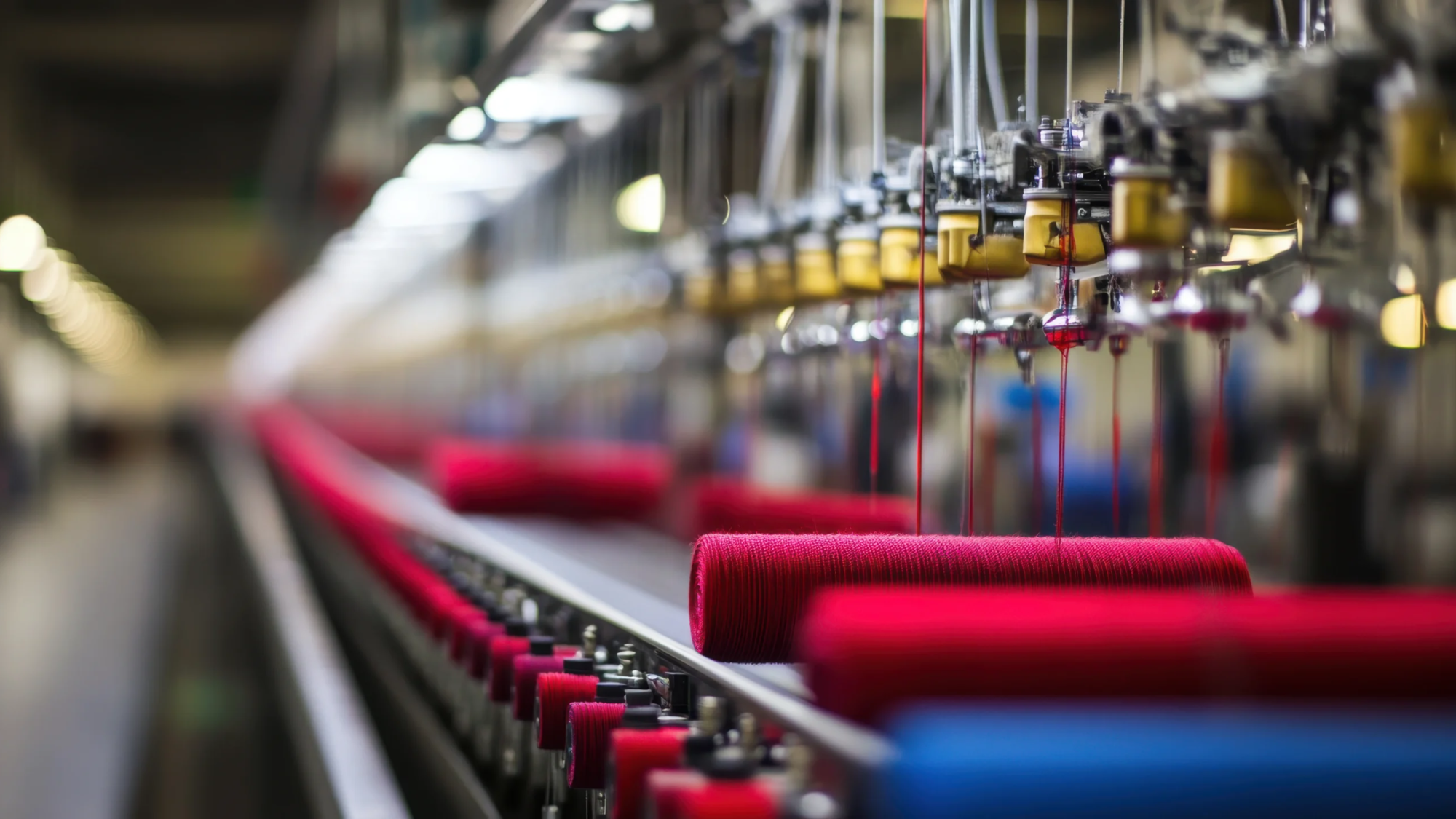
In today’s competitive manufacturing environment, Textile Machinery is no longer limited to basic mechanical equipment. It plays a critical role in productivity, product quality, sustainability, and long-term competitiveness of textile manufacturers. As market demands increase and environmental regulations become stricter, choosing the right textile machinery has turned into a strategic decision rather than a purely operational one.
This article serves as a practical guide for modern manufacturers who want a clearer understanding of Textile Machinery and its impact on contemporary textile production. It begins by explaining the evolving role of textile machinery in modern manufacturing and then outlines the main categories of machines used across the textile value chain. The article further examines the shift from conventional systems to advanced and automated textile machinery, highlighting how this transition affects efficiency, consistency, and cost control.
A dedicated section explores the relationship between Textile Machinery, sustainability, and resource efficiency, showing why modern production goals cannot be achieved without upgrading finishing and processing technologies. The guide also introduces the concept of smart textile machinery, focusing on automation, data-driven control, and intelligent optimization as key trends shaping the future of the industry. Finally, the article provides practical criteria to help manufacturers select textile machinery that aligns with their production needs, scalability goals, and long-term business strategy.
For manufacturers seeking better performance, smarter investment decisions, and a future-ready production line, this guide offers a concise and actionable overview of modern Textile Machinery and its role in today’s textile industry.
The Role of Textile Machinery in Modern Manufacturing
In modern production environments, Textile Machinery is no longer viewed as a simple set of mechanical tools used to process raw materials. Today, it functions as the core driver of productivity, quality consistency, and long-term competitiveness in textile manufacturing. Advances in automation, digital control, and process optimization have transformed traditional textile machinery into intelligent production assets that directly influence business performance.
The evolution from purely mechanical systems to advanced textile machinery and smart textile machinery has reshaped how factories operate. Modern machines are designed to reduce operator dependency, minimize variability, and maintain stable output across large production volumes. As a result, the performance of Textile Machinery now has a direct and measurable impact on fabric quality, production speed, energy consumption, and overall cost per unit. Faster setup times, lower defect rates, and improved repeatability translate into tangible operational advantages.
This shift has also changed how manufacturers approach investment decisions. A traditional view focuses primarily on upfront equipment cost, while a modern perspective evaluates Textile Machinery based on total cost of ownership, scalability, resource efficiency, and long-term value creation. In today’s competitive landscape, investing in modern textile machinery is not merely a production decision, but a strategic move that defines a manufacturer’s ability to compete, comply, and grow sustainably.
Key Categories of Textile Machinery and Their Applications
A clear understanding of the main categories of Textile Machinery is essential for designing an efficient and balanced textile production line. Each category contributes differently to the value chain, and weaknesses at any stage can directly affect product quality, production cost, and operational flexibility. Viewing textile machinery as an interconnected system helps manufacturers identify where value is created and where risks or inefficiencies may be hidden.
Spinning Machinery: Building the Foundation of Textile Production
Spinning machinery converts raw fibers into yarn and forms the foundation of the entire textile process. Yarn quality directly influences strength, uniformity, and consistency in later stages. Variations introduced at this stage propagate downstream, making early-stage machinery selection critical for stable production and predictable quality.
Weaving and Knitting Machinery: Fabric Formation and Performance
After spinning, yarn is processed using weaving machinery or knitting machinery, depending on the intended fabric structure and application. Weaving machines focus on dimensional stability, strength, and durability, while knitting machines are designed for flexibility, elasticity, and comfort. The choice between these categories affects fabric behavior, production speed, and material efficiency, making it a strategic decision rather than a purely technical one.
Finishing Machinery: The Highest Value-Adding Stage
Among all categories of Textile Machinery, finishing machinery represents one of the most critical value-adding stages. Finishing processes modify surface properties and functional characteristics of textiles, directly determining performance, compliance, and market suitability. Operations such as surface treatment, coating, drying, and functional finishing play a decisive role in product differentiation, durability, and end-use performance.
Why Finishing Machinery Carries the Highest Hidden Costs
Selecting inappropriate Textile Machinery in the finishing stage often results in the highest hidden costs across the production line. These costs may include increased defect rates, excessive energy or resource consumption, inconsistent quality, and limited adaptability to new product requirements. Unlike earlier production stages, errors introduced during finishing are difficult and costly to correct. For this reason, modern manufacturers increasingly treat finishing machinery as a strategic investment that directly defines competitiveness, efficiency, and long-term production value.
From Conventional to Advanced Textile Machinery
The transition from traditional systems to modern Textile Machinery reflects a fundamental change in how textile production is managed. Conventional machines rely heavily on manual operation and operator expertise, which often leads to inconsistent quality, higher resource consumption, and limited process stability. As production requirements become more demanding, these limitations directly affect efficiency and competitiveness.
In contrast, advanced textile machinery is designed around automation, precision control, and repeatability. By reducing human dependency and using controlled process logic, modern Textile Machinery delivers more consistent quality, lower defect rates, and improved production efficiency. These systems also support resource efficiency by optimizing energy and material usage.
The key difference lies in output reliability. While traditional machinery performs within narrow operating limits, advanced systems maintain stable results across varying materials and production conditions. For many manufacturers, upgrading legacy Textile Machinery is no longer optional but essential to meet modern standards for quality consistency, process control, and long-term competitiveness.
Sustainability and Efficiency in Textile Machinery
Sustainability has become a defining requirement in modern textile manufacturing, and Textile Machinery plays a central role in how effectively producers respond to environmental and regulatory pressures. Stricter environmental regulations, rising energy costs, and increasing scrutiny from global brands are forcing manufacturers to rethink how their production systems consume resources and generate waste. In this context, sustainability is no longer a policy objective, but a technical capability embedded in machinery.
Modern Textile Machinery directly influences water consumption, energy efficiency, and chemical usage across the production line. Traditional equipment often relies on resource-intensive processes with limited control, leading to excessive water use, high energy demand, and chemical-heavy treatments. In contrast, advanced machinery is designed to optimize process parameters, reduce unnecessary consumption, and improve process efficiency without compromising output quality. Lower defect rates and stable operation further contribute to reduced material waste and improved overall efficiency.
A clear example of this shift can be seen in the difference between wet finishing and dry finishing processes. Wet finishing relies heavily on water, heat, and chemical agents, making it inherently resource-intensive. Dry finishing technologies, enabled by modern Textile Machinery, achieve surface modification and functional enhancement with significantly lower environmental impact. From a machinery perspective, this transition requires precise control, stable process conditions, and advanced system design that conventional equipment cannot provide.
Ultimately, sustainability in textile manufacturing cannot be achieved without upgrading Textile Machinery. Environmental goals such as reduced emissions, lower water usage, and minimized chemical discharge are constrained by the technical limits of existing equipment. Without modern machinery that integrates resource efficiency, process control, and scalable performance, sustainability remains an aspiration rather than an operational reality. For manufacturers aligned with long-term competitiveness and responsible production, investing in sustainable textile machinery is not optional, but essential.
Smart and Intelligent Textile Machinery
The concept of smart textile machinery represents a natural evolution of modern Textile Machinery, driven by the need for higher consistency, adaptability, and operational resilience. Rather than relying solely on fixed mechanical settings, smart systems integrate sensing, data processing, and automated control to actively manage production conditions. This shift reflects a broader move from reactive operation to proactive and data-informed manufacturing.
At the core of smart textile machinery is the use of sensors, real-time data, and automatic control systems to stabilize quality throughout the production process. By continuously monitoring key parameters, modern Textile Machinery can detect deviations early and adjust operating conditions without manual intervention. This capability significantly improves quality stability, reduces variability between batches, and minimizes defects caused by process drift or material changes.
One important outcome of this approach is the reduced dependence on highly specialized human operators. While expertise remains essential, automation and data-driven control allow production lines to maintain consistent performance with lower sensitivity to individual skill levels. This not only improves reliability across shifts but also supports scalability and workforce flexibility in environments where skilled labor is increasingly scarce.
The adoption of smart systems also aligns textile manufacturing with the principles of Industry 4.0, where interconnected machines, digital workflows, and continuous feedback loops enable more transparent and responsive production. Within this framework, Textile Machinery becomes part of an integrated system rather than an isolated asset. Conceptually, this environment enables AI-driven optimization, where production parameters are refined over time based on accumulated operational data, without requiring constant manual tuning. As a result, smart textile machinery establishes the foundation for future-ready manufacturing that balances efficiency, quality, and adaptability.
How to Choose the Right Textile Machinery for Your Production Line
Choosing the right Textile Machinery is a practical decision that directly affects production performance, cost structure, and long-term competitiveness. Rather than focusing only on technical specifications or brand reputation, manufacturers should start by asking the right questions. What type of product is being produced? What level of quality consistency is required? How much variability exists in materials, designs, or customer requirements? Clear answers to these questions define the functional requirements of the machinery before any purchase decision is made.
The suitability of Textile Machinery must be evaluated in relation to product type, production volume, and target market. Machinery optimized for high-volume, standardized output may not perform efficiently in flexible or customized production environments. Likewise, equipment designed for premium or regulated markets must support higher levels of process control, quality consistency, and compliance. A mismatch between machinery capability and production goals often results in underutilization, bottlenecks, or excessive operating costs.
Equally important is the ability of Textile Machinery to adapt over time. Upgradeability, flexibility, and future readiness determine whether a production line can respond to changing market demands, new materials, or stricter standards. Machinery that cannot be expanded, reconfigured, or digitally integrated quickly becomes a limiting factor rather than a growth enabler.
From a financial perspective, decision-making should move beyond upfront price and focus on total cost of ownership (TCO). Energy consumption, maintenance requirements, downtime risk, resource efficiency, and lifespan all contribute significantly to the real cost of Textile Machinery. Lower initial cost often hides higher long-term expenses, especially when efficiency and reliability are compromised.
In summary, selecting the right textile machinery is a strategic process that balances technical fit, operational efficiency, and long-term value. Manufacturers who align machinery choices with production strategy, scalability, and lifecycle cost are better positioned to build resilient, competitive, and future-ready textile operations.
Check Our Other Article :
A Complete Guide to Textile Finishing and the Rise of Eco-Friendly Surface Technologies