
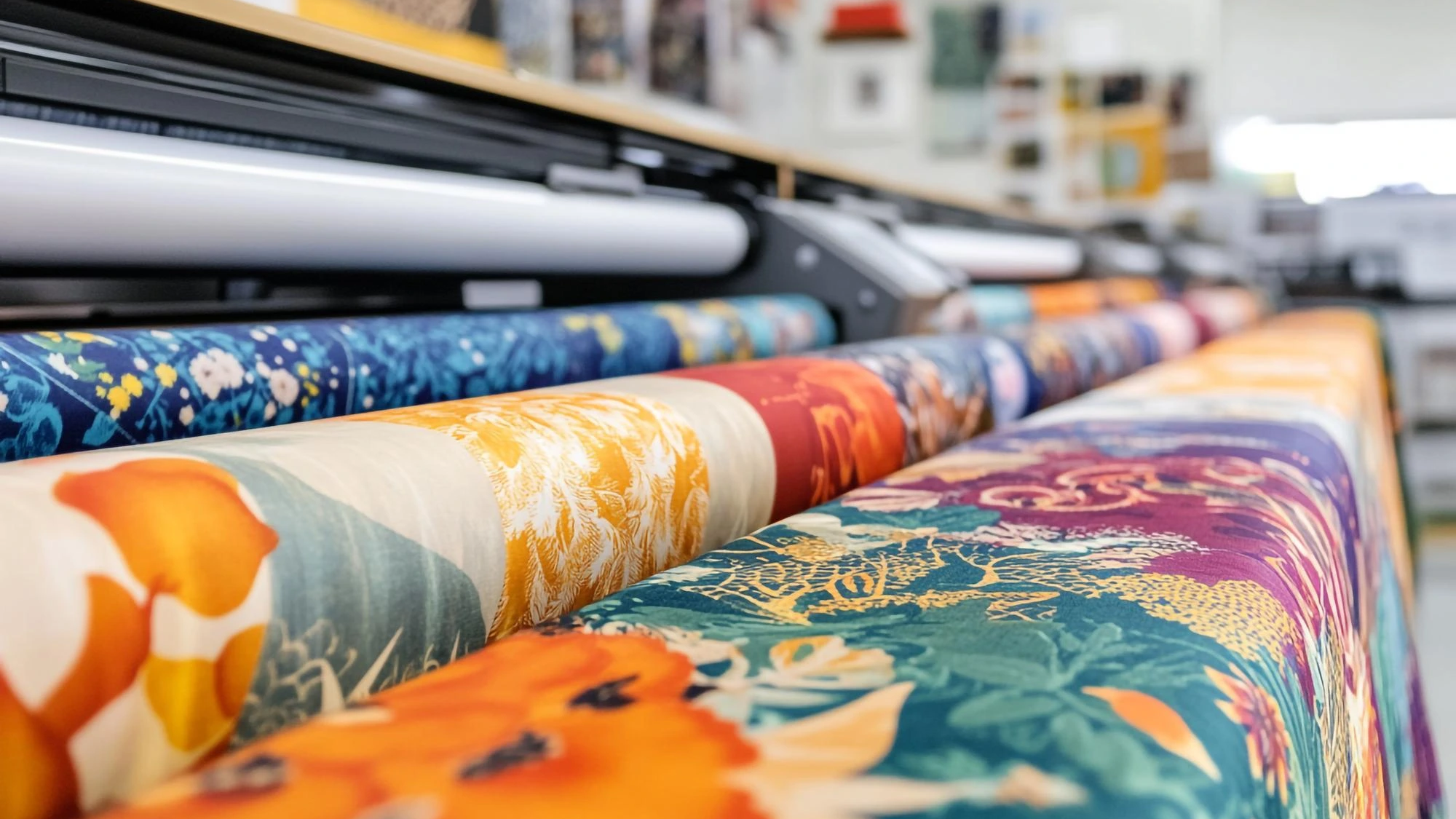
Textile finishing processes are the final and most decisive stage in textile production, where fabrics are enhanced to meet specific performance, aesthetic, and functional requirements. While earlier stages define the structure of a fabric, finishing determines how that fabric behaves, feels, performs, and complies with market or regulatory expectations. In practical terms, finishing is the point where technical textiles become usable products.
Understanding the Types of Textile Finishing Processes is essential because each finishing approach delivers a different outcome in terms of durability, appearance, comfort, and functionality. Mechanical, chemical, and advanced finishing methods are not interchangeable solutions. Each process interacts differently with fabric structure, fiber type, and end-use requirements. Selecting the wrong finishing process can lead to quality instability, excessive resource consumption, or products that fail to meet customer or industry standards.
In modern manufacturing, finishing is no longer a secondary or corrective step. It is a strategic stage that directly influences product differentiation, production efficiency, and sustainability performance. As manufacturers face tighter environmental regulations and higher expectations for consistency, the choice among different Types of Textile Finishing Processes becomes a core production decision rather than a technical afterthought.
This article builds on the broader concepts introduced in our https://fabrizontech.com/a-complete-guide-to-textile-finishing/ by focusing specifically on how finishing processes are categorized and applied in real production environments. By clearly outlining the main types of textile finishing processes and their roles, this guide helps manufacturers make informed, application-driven decisions without repeating foundational theory.
Mechanical Textile Finishing Processes
Mechanical finishing represents one of the most established Types of Textile Finishing Processes, focusing on physical modification of fabric structure without altering chemical composition. These processes rely on controlled mechanical action such as pressure, friction, heat, or tension to enhance the appearance, texture, and basic performance characteristics of textiles. Because no chemical reactions are involved, mechanical finishing is often used as a primary or preparatory step in textile finishing.
Within the broader Types of Textile Finishing Processes, mechanical methods play a critical role in defining how a fabric looks and feels. Processes such as calendaring improve surface smoothness and luster, while raising and brushing increase softness and thermal insulation. Compacting and sanforizing enhance dimensional stability by controlling shrinkage, directly improving fabric reliability during use. Through these operations, mechanical finishing influences hand feel, drape, thickness, and visual uniformity, which are key factors in product acceptance.
Mechanical textile finishing processes also contribute to functional performance in subtle but important ways. By modifying surface structure and fabric density, these processes can affect air permeability, wrinkle behavior, and abrasion resistance. Although they do not add new chemical functionalities, mechanical finishes often determine how effectively later finishing stages perform, especially in multi-step production lines.
Common mechanical textile finishing processes include calendaring, singeing, brushing, shearing, embossing, and compacting. Each method addresses a specific production objective and must be selected based on fabric type and intended application. Within the full spectrum of Types of Textile Finishing Processes, mechanical finishing remains a foundational approach that delivers immediate, cost-effective improvements in fabric quality while supporting consistency and scalability in textile manufacturing.
Chemical Textile Finishing Processes
Chemical textile finishing is one of the most widely used Types of Textile Finishing Processes, designed to modify fabric properties through controlled chemical treatments. Unlike mechanical finishing, which alters physical structure, chemical finishing introduces functional changes at the fiber or fabric level. The primary objective is to enhance performance characteristics that cannot be achieved through mechanical action alone.
Within the broader scope of Types of Textile Finishing Processes, chemical methods are applied to deliver specific and measurable functions. Common objectives include improving wrinkle resistance, water repellency, flame retardancy, antimicrobial performance, and color fastness. These finishes are achieved by applying chemical agents that interact with fibers through bonding, coating, or surface modification, enabling textiles to meet application-specific and regulatory requirements.
Chemical finishing has a direct impact on the functional properties of textiles. Treated fabrics may demonstrate improved durability, resistance to environmental factors, or enhanced comfort and usability in demanding conditions. In technical, medical, and performance textiles, chemical finishing often defines whether a product is fit for purpose. As a result, this category of finishing plays a critical role in product differentiation and value creation.
However, chemical textile finishing also introduces important limitations. Many chemical-based Types of Textile Finishing Processes rely on significant water consumption, energy input, and chemical usage, particularly in traditional wet finishing systems. These processes can generate wastewater and require careful handling to comply with environmental regulations. Additionally, maintaining consistency in chemical application can be challenging, especially when material variability or process instability is present.
For these reasons, while chemical finishing remains essential in modern textile manufacturing, its use increasingly requires optimization and careful process control. Understanding both the benefits and constraints of chemical finishing allows manufacturers to select the most appropriate Types of Textile Finishing Processes while balancing performance, efficiency, and sustainability objectives.
Wet vs. Dry Textile Finishing Processes
Within the broader Types of Textile Finishing Processes, the distinction between wet finishing and dry finishing represents a fundamental conceptual divide. These two approaches differ not only in how finishes are applied, but also in their requirements for resources, machinery, and process control. Understanding this difference is critical for evaluating efficiency, sustainability, and future technology pathways in textile manufacturing.
Wet finishing processes rely on water-based treatments in which chemicals, auxiliaries, and heat are used to modify fabric properties. Typical operations include washing, dyeing-related finishing, chemical functionalization, and rinsing steps. From a machinery perspective, wet finishing requires tanks, baths, dryers, and wastewater handling systems. As a result, many wet-based Types of Textile Finishing Processes are associated with high water consumption, significant energy demand, and complex effluent management. While effective and widely adopted, these processes place increasing pressure on manufacturers facing environmental regulations and rising operating costs.
In contrast, dry finishing processes modify fabric properties without immersing textiles in liquid media. These methods rely on controlled physical or surface-level interactions such as heat, pressure, radiation, or gas-based treatments. Dry finishing typically requires more precise and technologically advanced textile machinery, but it significantly reduces or eliminates water usage and minimizes chemical discharge. From an operational standpoint, dry-based Types of Textile Finishing Processes offer improved resource efficiency, faster processing, and greater process stability.
The difference between wet and dry finishing extends beyond resource usage to overall production strategy. Wet systems are often more forgiving but less controllable, while dry systems demand higher precision yet deliver more consistent and scalable results. This contrast helps explain why the textile industry is gradually shifting attention toward dry and hybrid finishing technologies.
By clearly distinguishing wet and dry finishing approaches, this comparison prepares manufacturers to understand the logic behind emerging and advanced textile finishing processes. As performance, sustainability, and automation become inseparable goals, dry finishing technologies increasingly serve as the foundation for next-generation solutions within the evolving landscape of Types of Textile Finishing Processes.
Advanced and Sustainable Textile Finishing Processes
Among the evolving Types of Textile Finishing Processes, advanced and sustainable approaches represent the most significant shift in how finishing is designed, executed, and evaluated. These processes move beyond incremental optimization of traditional methods and instead rethink finishing at a technological and systemic level. The goal is not only to improve fabric performance, but also to reduce environmental impact while maintaining industrial scalability.
Advanced textile finishing processes are characterized by high levels of precision, control, and process stability. Unlike conventional wet-based systems, many advanced approaches rely on surface-level modification rather than bulk chemical treatment. This allows manufacturers to achieve targeted functional effects such as improved wettability, adhesion, or surface energy with minimal material input. Within the broader Types of Textile Finishing Processes, these methods offer greater repeatability and compatibility with automated production lines.
Sustainability is a defining feature of this category. Sustainable textile finishing processes are designed to minimize water consumption, energy usage, and chemical dependency, addressing the core environmental challenges of the textile industry. By reducing wastewater generation and lowering resource intensity, these processes help manufacturers align with regulatory requirements and sustainability targets without compromising product quality or throughput.
From a strategic perspective, advanced and sustainable finishing technologies are shaping the future of textile manufacturing. As performance expectations, environmental constraints, and production complexity continue to rise, traditional finishing methods reach their technical limits. In contrast, next-generation Types of Textile Finishing Processes enable manufacturers to decouple performance improvement from resource consumption. This shift positions advanced finishing not as a niche innovation, but as a foundational element of future-ready, responsible textile production systems.
Choosing the Right Textile Finishing Process for Your Application
Selecting the right finishing approach is the final and most practical step in understanding the Types of Textile Finishing Processes. At this stage, the discussion moves from classification to informed decision-making. There is no single finishing method that fits all use cases. The optimal choice depends on how well a process aligns with product requirements, production constraints, and long-term business objectives.
The choice of a finishing process is primarily shaped by fabric type, end-use application, and performance expectations. Requirements related to durability, comfort, appearance, regulatory compliance, and functional behavior all influence which finishing route is appropriate. Production volume and operational stability are equally important. Some Types of Textile Finishing Processes are optimized for high-volume, standardized production, while others are better suited for specialized, high-value, or performance-driven textiles.
Beyond technical factors, finishing decisions must be directly connected to production strategy and market positioning. Processes with high water, energy, or chemical intensity may achieve the desired functionality but can introduce long-term cost and sustainability challenges. In contrast, more advanced and resource-efficient finishing approaches support premium positioning, regulatory readiness, and scalable growth. This is where technology-driven solutions that prioritize process control, consistency, and efficiency become strategically relevant.
In this context, companies like Fabrizon reflect a broader industry shift toward intelligent, low-impact finishing technologies that bridge performance goals with sustainability and operational efficiency. Rather than treating finishing as a downstream adjustment, this approach positions finishing as a core enabler of modern textile manufacturing strategy.
By evaluating the full spectrum of Types of Textile Finishing Processes through both technical and business lenses, manufacturers can avoid short-term compromises and build production systems that remain competitive as market expectations and regulations evolve. Ultimately, the right finishing process is one that delivers consistent quality today while supporting strategic flexibility and growth for the future.
Check Our Other Article :
A Complete Guide to Textile Finishing and the Rise of Eco-Friendly Surface Technologies